

Retail Arbitrage Explained: How Resellers Find Products to Flip

There's free money at the grocery store

Retail arbitrage grocery shopping cart with money in it

Key Points

  • Retail arbitrage means buying products at retail stores and reselling them online for a profit

  • The best opportunities come from limited edition items, regional exclusives, and mispriced goods

  • Profit margins vary widely; successful runs can return two to five times your original investment

Most resellers don’t stumble into their first flip by accident. They walk into a store already knowing what they’re looking for, or they’re alert enough to recognize an opportunity when it’s sitting right there on the shelf. That’s retail arbitrage in a nutshell: using knowledge, timing, and access to buy things at retail price that other people will pay a premium to get their hands on. You don’t need a warehouse, a big budget, or a complicated setup. You need the right information and the willingness to act on it fast when something good comes up.

What is Retail Arbitrage?

Retail arbitrage is the practice of buying products from physical retail stores and reselling them, usually online, at a higher price. The gap between what you pay at retail and what buyers will pay on the secondary market is your profit, minus platform fees, shipping, and any other costs.

It’s one of the oldest reselling models in the book, and it works because markets are imperfect. A product might be widely available in one region and completely unobtainable in another. A retailer might sell something at a price that doesn’t reflect its actual demand. A manufacturer might release a limited run that sells out before most people even know it exists. In all of these cases, the reseller acts as a bridge between supply and demand, and is rewarded for their knowledge and effort.

Real World Examples

The core skill in retail arbitrage is knowing what to look for before you walk in the door. That means staying informed about upcoming releases, regional exclusives, and products that tend to generate secondary market demand. Resellers who do this consistently are rarely browsing aimlessly; they have a short list of targets and they’re checking them methodically.

Retail arbitrage and reselling in general is easy. It’s about as far from “hard work” as you can get while still pocketing plenty of cash. All you need is some capital to get started, a car (ideally), a little free time, and some knowledge.

What Products Resell?

Not all retail arbitrage works the same way. The approach changes depending on why the profit opportunity exists in the first place. Here are the four main categories you’ll encounter as a beginner.

Many of these flips might seem like small potatoes: a few bucks here and there, nothing flashy. While that’s usually (but not always) true, the advantage of sourcing from a retailer is bulk buying. With some exceptions, resellers are able to load up on profitable items, turning single digit sales in double, even triple digit profits.

Trendy and Limited Edition Releases

This is probably the most common type of retail arbitrage opportunity, and the easiest to understand. A brand releases a limited edition product, it generates buzz online, and demand outpaces supply. Resellers who spot it early can buy at retail and flip for a multiple.

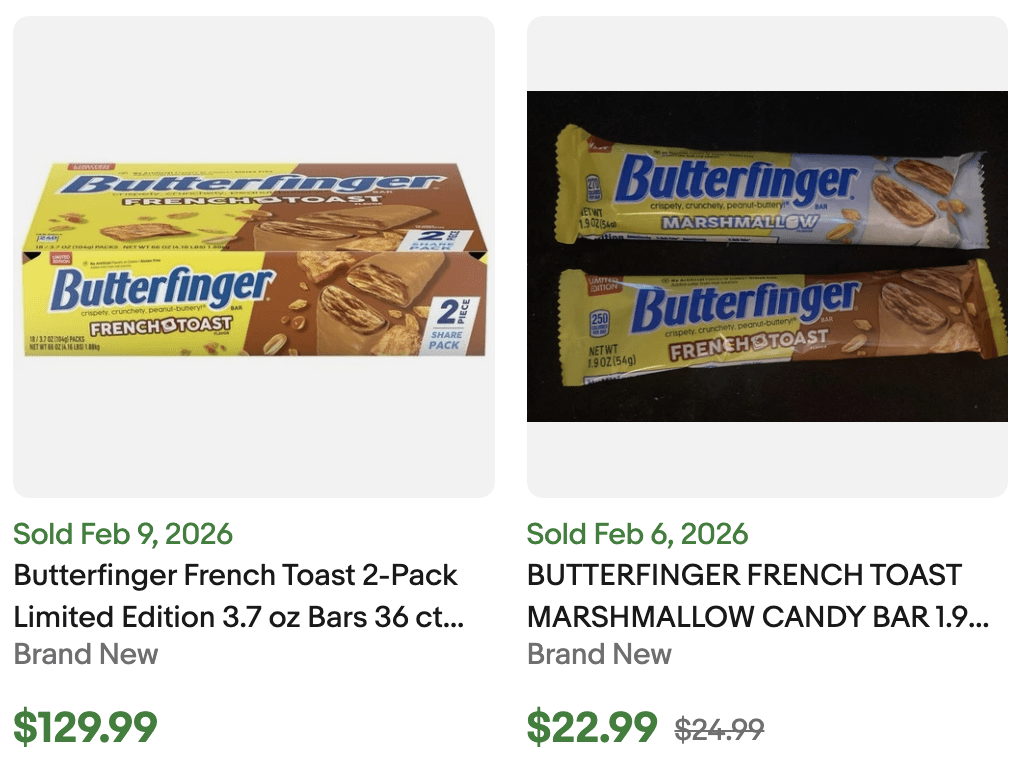
A good example of this in action: Butterfingers released a limited edition French Toast flavor sold exclusively through Costco. The product picked up organic hype on social media, and resellers who caught on early were able to buy in bulk and flip either the full packages or individual bars at a markup.

Butterfinger French Toast for Sale

The window is short. Once the product hit mainstream awareness, the manufacturer either expands distribution or they disappear entirely. Either way, the flip is dead.

That’s the nature of trendy item flips. They move fast. The resellers who eat on these are the ones who see the opportunity before it goes mainstream, buy promptly, and list immediately. Waiting to see if something “really takes off” usually means you’re too late.

The lifecycle of a trendy retail arbitrage opportunity tends to follow a predictable pattern. The product launches with limited distribution, scarcity builds demand, secondary market prices spike, then one of two things happens: either the product sells through completely and prices stabilize at a premium, or the manufacturer restocks and prices collapse back toward retail. Understanding where you are in that cycle before you buy is the single most important judgment call in this category.

Regional and Retailer Exclusives

Some stores create arbitrage opportunities almost by design. Their entire business model produces natural scarcity. Trader Joe’s is the clearest example of this in the retail arbitrage world, and it’s worth understanding why.

Trader Joe’s sells products you can’t get anywhere else. They have no online store, no delivery service, and no third-party retail partnerships. Their locations are also unevenly distributed across the country, with entire regions that have zero stores. The result is a permanent, structural gap between buyers who want specific Trader Joe’s products and their ability to obtain them.

This makes Trader Joe’s one of the most consistently productive hunting grounds for retail arbitrage. Mystery bags, collectable totes, and seasonal items regularly command serious premiums from out-of-state buyers on eBay. The opportunities aren’t always enormous in dollar terms, but they’re reliable, and the sourcing is simple: you go to Trader Joe’s, you buy the things people want, and you list them.

The broader lesson here applies beyond Trader Joe’s. Any retailer with exclusive products, no online sales, and limited geographic reach is a potential arbitrage target. When you’re evaluating a store, the key question is: does this retailer sell things that people outside my region can’t get? If the answer is yes, it’s worth paying attention.

Undervalued and Underpriced Goods

This category works differently from the others. The opportunity isn’t about scarcity or exclusivity; it’s about a retailer pricing something below what the market believes it’s worth. Costco is responsible for some of the best examples of this type of flip in recent memory.

The Nike SB Dunk “Hot Dog” sneaker collaboration with Costco is a relevant example. Costco offered a limited run of these shoes at a price well below what comparable Nike SB Dunks were trading for on the secondary market. Sneakerheads recognized the value immediately, stores sold out fast, and resellers who acted quickly made solid returns.

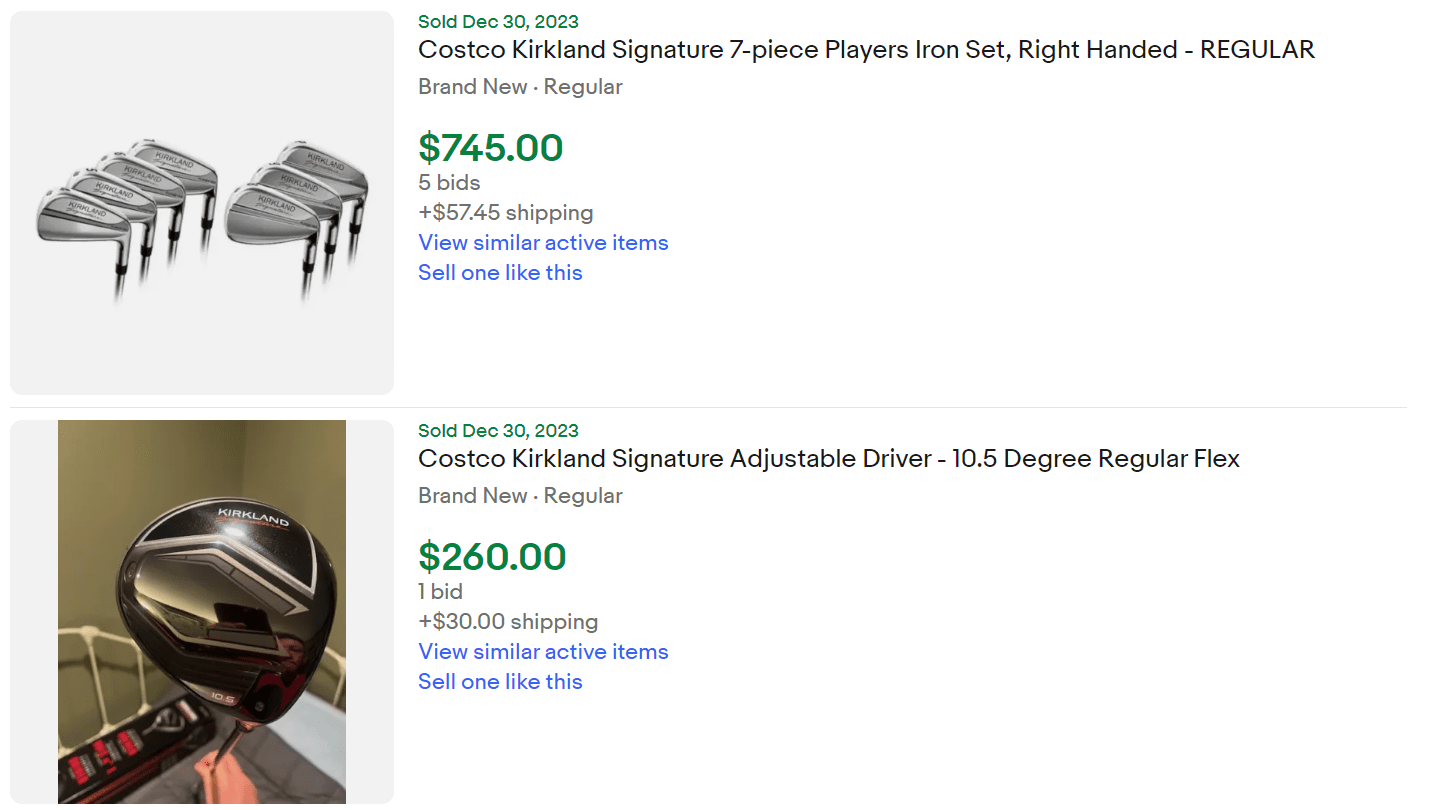
The Kirkland Signature golf clubs are a different kind of value flip. Costco released a set of irons that reviewers and players quickly noted were strikingly similar to TaylorMade’s P790s, which retail for several times the Costco price. In fact, they were so similar that TaylorMade sued Costco over the design.

The clubs generated enough buzz that demand on the secondary market pushed prices above retail. Resellers who understood golf equipment and recognized the quality relative to the price point were positioned to profit.

Costco Golf Clubs For Sale

Value drop arbitrage rewards category expertise more than any other type. You need to know what something is actually worth before you can recognize when a retailer is selling it too cheap. For beginners, this usually means focusing on one or two categories where you already have some product knowledge, rather than trying to evaluate everything.

Knowledge Plays and Insider Information

Every type of retail arbitrage requires information. But some opportunities go further, relying on specific tricks or insider knowledge that most shoppers don’t have.

One of the most well-known examples is the blind bag technique. Certain collectible products sold in sealed packaging contain items of wildly varying value. Before manufacturers caught on and adjusted their packaging, resellers discovered they could weigh individual packages to determine which variant was inside, then cherry-pick only the most valuable ones. By the time they were done, they’d leave behind a shelf full of low-value items and walk out with the expensive pulls.

This same approach once worked with certain trading card packs. Resellers who knew how to identify weighted packs could sort through boxes at retail and extract the valuable contents, leaving the rest for unsuspecting buyers. While card-weighing is no longer a concern, trading card collectors have recently discussed how CT scanning might impact the hobby.

Knowledge plays aren’t always about physical tricks. Sometimes the edge is simply timing. Knowing that a product is about to go viral before it does, knowing that a limited run has shorter supply than the manufacturer announced, knowing that a specific store location received inventory when others didn’t. These information advantages are real, and they’re the reason staying informed matters so much in retail arbitrage.

What You Need to Get Started Reselling

The barrier to entry for retail arbitrage is low. You need a phone with the eBay app or a similar price-checking tool, a selling account on your platform of choice, and enough capital to buy your first batch of inventory. For most people starting out, a budget somewhere between $100 and $300 is enough to make meaningful test runs without taking on significant financial risk.

The tools matter less than the habits. Successful retail arbitrageurs develop routines: they check their target stores regularly, they stay on top of release schedules, and they move fast when something good surfaces. Speed is a genuine competitive advantage in this model. Most arbitrage windows are measured in days or even hours before either the product sells out or word spreads enough to drain the opportunity.

When you’re evaluating a potential flip, you need to verify a few things before you commit money. First, check what the product is actually selling for on the secondary market, using eBay sold listings rather than active listings. Active listings show what sellers want; sold listings show what buyers actually paid. That distinction matters a lot. Second, calculate your real profit after platform fees, shipping, and any packaging costs. eBay takes 13% off the top, and that can turn a seemingly good margin into a mediocre one. Third, understand your exit if the flip doesn’t work out. Is the product something you can return? If it’s final sale, you own it regardless of whether it resells. Know that going in.

Recognizing Profitable Items in Stores

The biggest obstacle for most beginners isn’t finding items once they’re at the store. It’s knowing where to look and what’s worth pursuing before they go. This is where most retail arbitrageurs either develop a real edge or stay perpetually behind the curve.

The practical answer is to build a consistent information feed. Follow product launch calendars for the categories you care about. Keep track of limited edition releases from brands with strong secondary market histories. Pay attention to social media chatter around specific products, particularly on platforms where collectors and resellers congregate.

Over time, you’ll find that sourcing flips is the hardest part of the job. How do you know if something will sell out? How can you recognize a profitable item from one that will burn you?

Providing that information is our goal at Resell Calendar. While we regularly publish upcoming drops and unique flips on our website for anyone to read, we also maintain RC Elite as a closed Discord group to paying members. This is where the most lucrative opportunities live, so consider joining if you want to upgrade your reselling from a side hustle to full time gig.

Scaling Your Retail Arbitrage Business

Once you’ve done a few flips and have a feel for how the model works, the natural question is how to do more of it. Scaling retail arbitrage comes down to two things: buying more per opportunity, and finding more opportunities.

Buying more per opportunity requires capital and confidence. When you’ve verified that a product has genuine secondary market demand and you understand the margin, increasing your quantity is a straightforward way to multiply returns. The risk is that you can also multiply your losses if your read on the market is wrong, so this step works better once you’ve developed reliable judgment in a specific category.

Finding more opportunities requires either more time or better information. More time means hitting more stores, checking more release calendars, and monitoring more categories. Better information means developing sources that surface good opportunities before you’d otherwise encounter them, whether that’s a community, a publication, or a network of other resellers you trade tips with.

The most sustainable approach for most resellers is to combine both: get more systematic about the categories you already know, and gradually expand your information sources as you prove out the model.

Common Mistakes

Retail arbitrage is approachable for beginners, but it’s easy to lose money if you skip basic due diligence. A few mistakes come up consistently.

Checking active listings instead of sold listings is probably the most common. It creates a false picture of the market. What sellers are asking and what buyers are paying are often very different numbers, especially for items where optimistic resellers have piled in at inflated asking prices.

Buying without an exit plan is the mistake with the most downside. If you purchase a “final sale only” item that doesn’t resell, you’re stuck with inventory you can’t return. This isn’t a reason to avoid final-sale products entirely; some of the best flips come with no return option. But you need to understand that risk before you commit. The more uncertain you are about the demand, the more important it is to have a store that will take the product back if the flip doesn’t work out.

Why Return Policies Matter

  • If you can return your item, it becomes a zero-risk flip

  • No risk means more confidence; you can afford to load up on an item

  • This multiplies your profits if the flip is successful

  • And if not? Take your item(s) back to the store for a full refund

Ignoring platform fees is another common mistake. A product that seems to offer a $30 margin before fees might net you much less after eBay’s 13% cut, shipping, and packaging. Always calculate your real take-home before buying. Selling locally avoids platform and shipping fees entirely, but can be a hassle.

Moving too slowly is the last one worth calling out specifically. Retail arbitrage opportunities are perishable. A product that’s hot this week might be widely available or completely forgotten in two weeks. Hesitating while you “wait to see how it goes” is one of the most reliable ways to miss good opportunities entirely.

Bottom Line

Retail arbitrage is one of the most accessible ways to get into reselling because the upfront cost is low, the feedback loop is fast, and the skills transfer to other models as you grow. The same judgment you develop evaluating whether a Costco product is worth flipping will serve you when you’re evaluating thrift store finds or online arbitrage opportunities.

Start with a category you already know something about. Learn how to read sold listings. Make a few small test flips before you buy in bulk. And pay attention to where good information comes from, because in retail arbitrage, the reseller with the best sourcing intelligence consistently outperforms the one who’s just wandering the aisles hoping to get lucky.

Get posts like these in your inbox.

Monthly digest of the best of Resell Calendar.

Related Articles

Reseller holding cash
How Much Money Can You Make Reselling?

It depends on what you're willing to put in

Reseller shipping a package for an eBay sale
A Quick Guide to eBay Shipping for New Sellers

Take pictures, pack and seal well, and ship promptly

Best Items to Flip Beginner Reseller
The Best Items for Beginner Resellers to Flip

Start small and record easy profits first

woman holding phone and credit card in front of laptop
How to Write a Great eBay Listing

A little SEO knowledge goes a long way

Presell Guide eBay Reseller Policies
The Complete Guide to Preselling: When, Why, and How

For resellers, putting up presale listings can circumvent risk and lock in early profits

Is Sneaker Reselling Dead in 2025? We Dont Think So
Sneaker Reselling has Changed in 2025, But it's Not Dead

Margins are down across the board, but volume is up. Flipping sneakers is still plenty profitable

2025 Thrift Guide for Resellers
Here's Why 2025 is the Best Year to Get Into Thrifting

We're seeing some of the biggest profits since 2009. If you're not thrifting, you're leaving money on the table

Start Here

Reseller holding cash
How Much Money Can You Make Reselling?

It depends on what you're willing to put in

Reseller shipping a package for an eBay sale
A Quick Guide to eBay Shipping for New Sellers

Take pictures, pack and seal well, and ship promptly

Pounce on resell opportunities before they sell out.

Get the details

Reseller holding cash
How Much Money Can You Make Reselling?

It depends on what you're willing to put in

Reseller shipping a package for an eBay sale
A Quick Guide to eBay Shipping for New Sellers

Take pictures, pack and seal well, and ship promptly

Best Items to Flip Beginner Reseller
The Best Items for Beginner Resellers to Flip

Start small and record easy profits first

Subscribe to Newsletter

A monthly digest of the best of Resell Calendar.