
Luxury Watch Gray Market Hits Two-Year High

Looking to buy a watch? Come prepared

Luxury Watch Gray Market 2026 Prices
Feed

By RC Staff

Key Points

  • Precious metal price hikes have impacted the market

  • Tariffs affecting Swiss watchmakers shocked prices

  • Gen Z is entering the market in larger numbers after lagging behind

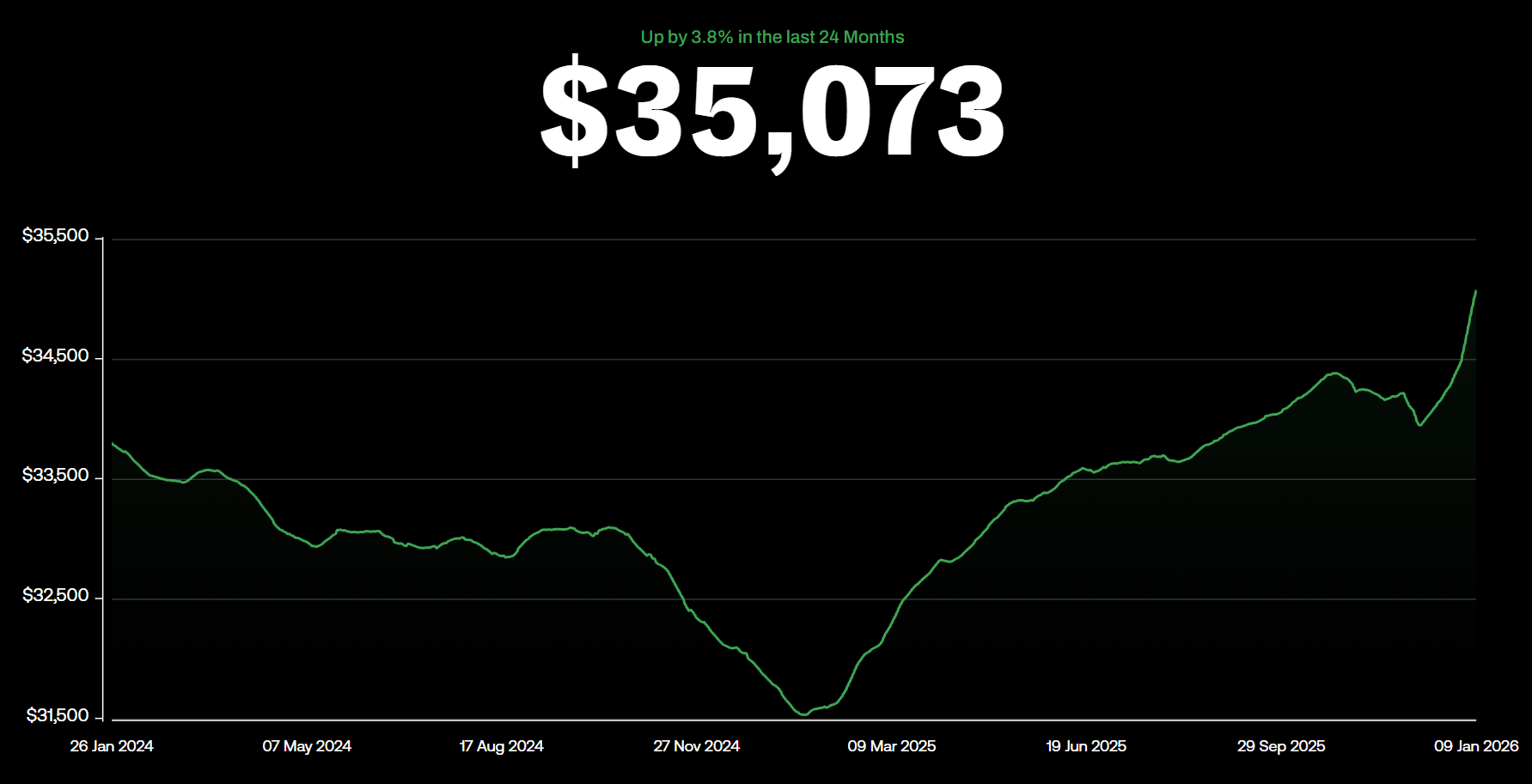
The luxury watch secondary market just hit its highest point since October 2023, and resellers who’ve been paying attention are finally seeing sustained momentum after three rocky years. This isn’t speculation or hype-driven mania like we saw in 2021 and 2022. The current recovery is being driven by actual economic pressures that are making luxury timepieces more expensive at every level of the supply chain. Understanding these dynamics matters for resellers trying to figure out which categories to focus on and when to pull the trigger on inventory.

What does the Watch Market Look Like?

The secondary market showed consistent growth throughout 2025, with the Bloomberg Subdial Watch Index gaining 5.3% in just the first half of the year before extending those gains through the third and fourth quarters. While prices dipped slightly in November, December holiday buying brought them back up to finish the year strong.

Specific models tell the real story of where money is moving. Rolex’s gold Daytona 116508 and Patek Philippe’s Aquanaut 5167A were among the year’s top performers. On the Rolex side, yellow-gold models saw particularly dramatic climbs. The Day-Date Ref. 228238, famously owned by singer Zayn Malik, jumped from 30th to ninth place on the Subdial Watch Index in just three years, one of the fastest ascents since the index launched in 2022.

Subdial Watch Index January 2026 Reseller

The WatchCharts Overall Market Index tells a similar story across broader market data. Both the Rolex and Patek Philippe indices finished 2025 in positive territory after struggling through 2023 and 2024. Patek Philippe in particular showed remarkable resilience, with prices up 2.8% year-to-date driven almost entirely by sports collections like the Aquanaut and Nautilus.

But here’s what resellers need to understand: this isn’t a universal bounce. While sports models from top-tier brands recovered, dress watches from brands like Jaeger-LeCoultre, Piaget, and Blancpain actually dropped 8-16% during the same period. The market is polarizing between winners and losers more sharply than we’ve seen in years.

Why Watch Prices are Going Up

Three major economic forces converged in 2025 to push both retail and secondary prices higher. This isn’t just brands raising prices for fun; there are real costs hitting the supply chain.

Gold and Silver Price Hikes

Gold prices surged from around $2,600 per ounce at the start of 2025 to over $4,400 by December, a 70% increase that represents the biggest annual move in precious metal prices since the 1970s. The surge was so strong that resellers were turning a profit on discounted jewelry from major retailers. When the raw material in your product nearly doubles in price over 12 months, costs have to go somewhere.

Brands that use their own in-house foundries, like Rolex, felt this immediately. Every gold watch they produce costs dramatically more to manufacture than it did a year ago. This explains why gold Rolex models saw retail price increases of 9% in January 2026, compared to 5.6% for steel models.

But here’s the interesting part for resellers: despite gold nearly doubling, secondary market prices for gold watches haven’t kept pace. The gold content in a Rolex Day-Date 40 increased by approximately $7,000 in value over the past year, but most Day-Date references appreciated by less than $5,000 on the secondary market. The market still primarily assigns value based on brand equity and craftsmanship rather than melt value alone, which creates interesting arbitrage opportunities.

Trump's Tariffs Affected Watchmakers

The Trump administration’s tariff policy on Swiss watches created unprecedented volatility throughout 2025. The tariff started at the traditional 2-3%, jumped to 39% in April (which would have been existential for many brands), then settled at 15% by year’s end after negotiations.

Even at 15%, that’s a massive jump from historical norms. Major brands including Rolex, Patek Philippe, Audemars Piguet, and Omega all raised retail prices in response. Patek Philippe stood out with a 22.4% U.S. retail price increase for the year, including a 14.9% hike tied directly to the temporary 39% tariff.

Here’s what matters for resellers: when retail prices increase, the floor for secondary market pricing moves up too. A Patek Philippe Aquanaut 5167A increased from $24,750 to $25,958 at retail, a 4.9% bump. Despite this increase, the model still trades at about double retail on the secondary market, meaning there’s room for both retail price increases and healthy resale margins.

The Swiss Franc Surged

Currency fluctuations added another layer of pressure. The Swiss Franc appreciated more than 10% against the U.S. dollar in 2025, touching 1 CHF to $1.27 by December. When the currency your manufacturing costs are denominated in strengthens against your biggest market’s currency, prices have to adjust.

Combined with tariffs and gold prices, brands faced unprecedented cost pressures. Most responded by raising prices twice in 2025, with some like Rolex implementing three separate increases.

Gen Z Enters the Watch Market

While economic pressures pushed prices up, Gen Z buyers fundamentally changed what types of watches are moving on the secondary market. This demographic shift has created opportunities in categories that were completely ignored during the 2020-2022 steel sports watch mania.

Gen Z’s watch preferences look nothing like millennials or older collectors. They’re gravitating toward smaller, dressier, design-led timepieces, often in gold, that can be worn as jewelry rather than pure tool watches. Dress watch purchases by Gen Z increased 44% since 2018, compared to 29% for other age groups. Today, 12% of all Gen Z watch purchases are dress watches, the highest share among any demographic.

Cartier has been the biggest beneficiary of this trend. The brand’s share of Gen Z purchases on Chrono24 exploded from 1.7% to 6.8% over seven years, a fourfold increase. That vastly outpaces Cartier’s overall market growth, which went from 2.9% to 4.8% over the same period.

Taylor Swift’s engagement photos wearing a rare gold and diamond Cartier Santos Demoiselle sent this trend into overdrive. Cartier watches are now positioned as Gen Z’s Rolex, with the Panthère and Tank models becoming status symbols for a generation that values elegance and individuality over rugged functionality.

This matters for resellers because vintage Cartier pieces that were “flying under the radar” just a few years ago now command significant premiums. The entry point remains accessible compared to Rolex (a steel Panthère starts around $4,600), but the cultural cachet has exploded.

Interestingly, Chrono24 data shows this trend may already be plateauing. The massive increase in demand for dress watches that started in 2023 saw its first slight dip in Asia and North America during H1 2025. Whether this represents a pause or Gen Z moving to the next trend remains to be seen.

Which Watch Brands are Thriving?

The secondary market in 2025 showed clear winners and losers, with performance gaps widening more than in previous years.

Consistent Performers

Rolex stabilized at a solid 33.7% market share, maintaining clear dominance while speculative premiums from the pandemic era continued to normalize. Internally, the Daytona overtook the Submariner as the second most popular collection behind the evergreen Datejust. Rolex prices did decline 0.3% in August 2025, the first monthly drop since February, but remained positive for the full year.

Omega held the second-highest market share at 11.3%, up 4% from H2 2024. The brand’s steady performance is built on a loyal collector base and successful limited editions like the Speedmaster Silver Snoopy Award, which consistently trades above retail.

Breakout Stars

Patek Philippe was the standout performer, continuing its recovery for six consecutive months through mid-2025. The brand gained 2.8% year-to-date thanks almost entirely to sports collections. The Aquanaut climbed 5.0% and the Nautilus gained 2.2%.

This recovery was partly driven by strategic discontinuations. When Patek discontinued key references like the Nautilus 5712/1A and Aquanaut 5167/1A, prices for those models jumped. Over six months, the 5712/1A climbed 10.4% while the 5167/1A rose 7.8%.

Cartier showed extraordinary momentum among younger buyers, while TAG Heuer, Grand Seiko, Tudor, and IWC all posted solid gains during the August slowdown when most brands struggled.

The Strugglers

Dress watch brands outside of Cartier faced significant headwinds. Blancpain dropped 12.6%, Piaget fell 12.5%, and Jaeger-LeCoultre declined 8.5%. Even within stronger brands, dress watch collections underperformed. Patek’s Grand Complications collection fell 6.1%, the Calatrava dropped 5.3%, and general Complications declined 3.8%.

The pattern is clear: sports collections from top-tier brands and dress watches from culturally relevant brands (primarily Cartier) are eating everyone else’s lunch.

Effects on Watch Retail Pricing

Retail price increases accelerated dramatically in 2025, with nearly every major brand raising prices in the U.S., often multiple times. Rolex implemented three separate increases between January 2025 and January 2026, averaging 7% for the most recent jump.

Examples of retail increases tell the story:

  • Rolex Submariner 124060: $9,500 to $10,050 (+5.8%)
  • Rolex GMT-Master II “Batman” 126710BLNR: $11,100 to $11,800 (+6.3%)
  • Rolex white-gold Day-Date 228239: $47,500 to $51,600 (+8.6%)
  • Patek Philippe Aquanaut 5167A: $24,750 to $25,958 (+4.9%)
  • Audemars Piguet steel Royal Oak Chronograph: $40,500 to $44,400 (+9.6%)

These aren’t small adjustments. The cumulative effect means many popular models cost 15-20% more at retail than they did at the start of 2024.

For resellers, higher retail prices create more breathing room for secondary market margins. When the floor moves up, flipping opportunities remain viable even if percentage premiums compress slightly.

Luxury Watch Gray Market Grows

The secondary market is estimated at $25 billion annually and could eventually overtake the primary market’s $50 billion according to industry consultant Oliver Müller. The market expanded 23.8% in Q3 2025 despite tariffs and retail price hikes, showing collectors increasingly seek value, trust, and liquidity in the pre-owned space.

Certified Pre-Owned programs doubled sales year-over-year, with major brands recognizing the secondary market as a feature rather than a bug. Europe surpassed the U.S. as the largest resale hub, while Asia surged 43% in total transaction value.

Independent brands like F.P. Journe, H. Moser & Cie., and Laurent Ferrier achieved record turnover, suggesting that as prices for mainstream luxury watches climb, collectors are exploring alternatives with stronger value propositions.

The Watch Market in 2026

Several factors will determine whether the secondary market continues its recovery or stalls out.

Gold prices remain elevated above $4,000 per ounce, meaning cost pressures aren’t going away. If gold stabilizes or declines, watch prices may find a ceiling. But if precious metals continue climbing, expect more retail increases and higher secondary market floors.

Currency volatility continues to create uncertainty. The Swiss Franc’s strength against the dollar shows no signs of weakening, which means Swiss brands will likely maintain or increase U.S. prices regardless of tariff changes.

The tariff situation remains fluid. While 15% is more manageable than 39%, it’s still five times higher than historical norms. Any further increases would ripple through the entire supply chain.

Gen Z’s preferences will continue reshaping demand patterns. If the dress watch trend is truly plateauing as Chrono24 data suggests, the next wave could favor different categories entirely. Resellers who identify the shift early will have an edge.

Inventory levels remain a critical factor. Rolex still maintains years-long waitlists for many models despite price increases, showing demand holds steady at the very top. But mid-tier luxury brands face tougher conditions, with slower inventory turns and weaker pricing power.

Bottom Line

The luxury watch secondary market’s recovery to two-year highs reflects real economic factors rather than speculative mania. Gold prices, tariffs, and currency fluctuations created legitimate cost pressures that pushed retail prices higher, which in turn lifted secondary market floors.

The recovery isn’t universal. Top-tier sports watches from brands like Rolex, Patek Philippe, and Audemars Piguet showed strength, while dress watches outside of Cartier’s Gen Z-driven boom struggled. This polarization creates both opportunities and risks depending on what inventory you’re holding.

For resellers, the key insight is this: sustained price increases are being driven by input costs, not artificial scarcity or hype. That makes the current market more stable than the 2021-2022 bubble, but also means profit margins will be harder-won. The days of easy 50-100% flips on anything with a Swiss movement are over.

Smart resellers will focus on categories with genuine demand drivers: gold models benefiting from precious metal appreciation, discontinued sports references with proven collector appeal, and culturally relevant dress watches riding Gen Z momentum. Avoiding the middle—generic luxury pieces with weak brand equity—becomes more important as the market polarizes.

The watch market entering 2026 looks fundamentally healthier than it has in three years. Prices are rising for actual reasons, demand patterns reflect real consumer preferences rather than speculation, and the secondary market is maturing into a legitimate parallel ecosystem. That’s a better foundation for sustained profits than hype-driven volatility ever was.

Get posts like these in your inbox.

Monthly digest of the best of Resell Calendar.

Related Articles

Pabst Godzilla 99 Pack PBR Reseller
Feed

Alcohol

Pabst Rolls Out Godzilla-Branded 99-Packs

This special edition beer is limited to 4,000 units

Pokemon Day 2026 30 Anniversary Reseller
Feed

Trading Cards

A Complete Guide to Pokemon Day 2026

Mark your calendars for January 30

Neutrogena Men Sensitive Skin Shaving Reseller
Feed

Home & Living

Discontinued Neutrogena Sensitive Skin Shaving Cream Resells

No risk, plenty of upside

Dewalt Propane Heater 70000 BTU Recall
RC Elite Members Pick Up Brand New Propane Heaters for Free

Technically, Amazon shouldn't have even been selling these

LEGO Gingerbread AT AT 40806 Reseller
Feed

Toys & Games

Viral LEGO Gingerbread AT-AT Available for Backorder

These might be must-have gifts in 2026

McCormick Bridgerton Finishing Sugar Reseller
Feed

Food & Beverages

McCormick's Bridgerton Finishing Sugars are Reselling

This is a stupid simple way to triple your money, fast

Smiling Friends Plush Jazwares Reseller
Feed

Toys & Games

Look Out for Smiling Friends Plush Restocks at Hot Topic

Easy money if you don't mind a trip to the mall

Madison Beer Signed Locket Vinyl Reseller
Feed

Vinyls

Madison Beer's Signed Locket Vinyl is an Easy Flip

Looking for some easy cash through the holidays? We've got you

Pop Tart Bowl Tailgate Pack Giveaway
Feed

Food & Beverages

Last Chance to Enter Pop-Tarts' Tailgate Giveaway

These limited edition breakfast items should fly on eBay

Start Here

Presell Guide eBay Reseller Policies
The Complete Guide to Preselling: When, Why, and How

For resellers, putting up presale listings can circumvent risk and lock in early profits

Is Sneaker Reselling Dead in 2025? We Dont Think So
Sneaker Reselling has Changed in 2025, But it's Not Dead

Margins are down across the board, but volume is up. Flipping sneakers is still plenty profitable

2025 Thrift Guide for Resellers
Here's Why 2025 is the Best Year to Get Into Thrifting

We're seeing some of the biggest profits since 2009. If you're not thrifting, you're leaving money on the table

Pounce on resell opportunities before they sell out.

Get the details

Presell Guide eBay Reseller Policies
The Complete Guide to Preselling: When, Why, and How

For resellers, putting up presale listings can circumvent risk and lock in early profits

Is Sneaker Reselling Dead in 2025? We Dont Think So
Sneaker Reselling has Changed in 2025, But it's Not Dead

Margins are down across the board, but volume is up. Flipping sneakers is still plenty profitable

2025 Thrift Guide for Resellers
Here's Why 2025 is the Best Year to Get Into Thrifting

We're seeing some of the biggest profits since 2009. If you're not thrifting, you're leaving money on the table

Subscribe to Newsletter

A monthly digest of the best of Resell Calendar.