
From thrift shops to card stores, the same skills apply
Less risk, more opportunities, plenty of profits
There's free money at the grocery store
Sealed booster boxes and cases are the safest entry point for beginner trading card resellers
Pokemon TCG, Magic: The Gathering, and Topps sports cards are the most established markets
Graded cards command significantly higher prices than raw cards, but grading is not required to turn a profit
The trading card market can look overwhelming from the outside. There’s a whole language to learn, dozens of products releasing every month, and prices that can swing wildly based on factors you don’t yet understand. But the good news is that the core reselling opportunity here is actually pretty simple: buy sealed product before it sells out, list it when demand outpaces supply. That basic play has made a lot of people solid money, and it doesn’t require any deep expertise to execute. This guide covers what you need to know to start flipping cards profitably, what the more advanced strategies look like, and where the real risks are hiding.
Before you can flip cards intelligently, you need to understand what the product hierarchy looks like. Nearly every major trading card game and sports card brand sells product in the same basic structure.
Packs are usually the smallest unit. A booster pack contains a handful of cards, usually between five and fifteen, drawn randomly from a set’s full card pool. Individual packs retail anywhere from $4 to $20 depending on the product, and they’re the entry point for most casual buyers.
Booster boxes are sealed collections of packs, usually 24 to 36 packs per box. This is the most common unit traded on the secondary market. A Pokemon TCG booster box might retail around $95 to $145 depending on the set. A Topps hobby baseball box can run $100 to $300 at release. When resellers talk about flipping sealed product, this is almost always what they mean.
Cases are sealed containers holding a set number of boxes, typically 6 or 12. Cases are the largest unit most individual resellers deal in, and they’re where the math starts to get interesting. If a case of 12 boxes retails for $1,200 and you can flip it for $1,600 when the product goes scarce, you’re looking at a meaningful profit on a single transaction. The downside is that you’re also taking on more capital risk if demand doesn’t materialize.
The thing makes trading cards different from almost any other product category: what’s inside the box can be wildly more valuable than the box itself. Every major set is built around a base card set, which are the common cards featuring players, characters, or creatures at their standard print run. Then there’s a layer of parallel versions of those same cards, which are distinguished by different foil treatments, color borders, or printing techniques, produced in much smaller quantities.
A base Charizard might be worth a dollar. A holo parallel of that same Charizard numbered to 25 copies could be worth hundreds. A 1/1 version, meaning literally one was ever printed, could be worth thousands. This structure creates a lottery dynamic that keeps demand for sealed product high, because every pack pulled could theoretically contain something extraordinary.
Inserts add another layer. These are cards that don’t appear in the base set at all, featuring their own unique designs, themes, or formats. Autographed cards, known as autos, are signed directly by the player or character actor and are among the most valuable cards in any given release. A logoman card, which embeds the actual logo patch from a player’s jersey, is almost always a 1/1 and represents some of the highest-value individual cards in the sports card hobby.
You don’t need to memorize every parallel and insert in every set to resell sealed product effectively. But understanding that this internal value structure exists, and that it’s what drives demand for sealed boxes and cases, is the foundation for everything else.
There’s no single right way to approach card reselling. The three main strategies offer very different risk profiles, time commitments, and profit ceilings.
This is what most resellers are doing, and what beginners should start with. You buy sealed boxes or cases at or near retail, then sell them when demand exceeds supply. Your product is verifiably authentic and unopened. Buyers know exactly what they’re getting. You don’t need to know anything about individual card values or condition grading to execute this strategy successfully.
For hyped releases, buying cards at retail prices can be very difficult. You’ve probably seen signs go up in grocery stores enforcing strict quantity limits and warning against loitering. Some dedicated resellers will actually follow card stockers from store to store and immediately buy any product they load on shelves. Expect fierce competition for the most profitable drops.
The risk is real but manageable. If you buy a case and demand never develops, you’re sitting on a significant amount of inventory with your capital locked up. Do your research before buying: check eBay sold listings for similar past releases, look at whether presale listings are already commanding a premium, and be honest with yourself about whether the excitement you’re seeing is genuine or just hype that won’t translate into secondary market demand.
Ripping packs, meaning opening sealed product yourself in hopes of pulling valuable card. It’s a lot of fun, and also quite a poor financial strategy for resellers.
Opening boxes is essentially a slot machine. The expected value of the cards you pull is almost always lower than the retail price of the box, because the manufacturer builds that margin in. Yes, people pull Charizard gold stars and Trout superfractors and make back ten times what they paid. Those pulls get shared everywhere online. The thousands of boxes that yielded nothing spectacular get quietly recycled.
If you want to rip packs because it’s fun and you enjoy the hobby, that’s completely legitimate. Just don’t do it expecting to profit. The resellers who consistently make money on cards are almost always buying and selling sealed product, not gambling on what’s inside.
Buying and selling individual cards gives resellers more control over their profits than any other approach. Rather than betting on sealed product and hoping demand develops, a knowledgeable collector can identify specific cards they’re confident in, buy them strategically, and hold them until the right buyer comes along. Done well, individual card reselling can produce hundreds or even thousands of dollars of profit on a single transaction.
The catch is that it requires a level of expertise most beginners simply don’t have yet. You need to understand print run history, know which parallels carry real demand within specific collector communities, be able to accurately assess a card’s condition before buying it raw, and have enough market familiarity to recognize when something is genuinely underpriced versus just cheap for a reason. The risks are real: capital locked up in cards that don’t appreciate, condition issues you didn’t catch, or markets that shift before you find the right buyer.
The trading card hobby covers a lot of ground. Here’s a breakdown of the biggest markets and what makes each one distinct.
Pokemon is the largest trading card game in the world by revenue, and it has been for several years running. The collector base spans every age and demographic, from kids buying packs at Target to serious collectors hunting specific PSA 10 vintage holos. That breadth of demand is what makes Pokemon such a reliable reselling category.
Pokemon TCG releases new sets roughly every three months, and the most anticipated sets, particularly those featuring fan-favorite Pokemon or nostalgic throwback designs, can sell out at retail within days. The 2021 anniversary sets were a landmark example, with some sealed booster boxes eventually trading at 3x and 4x retail on the secondary market.
The retail distribution model is also favorable for resellers. Pokemon product hits Target, Walmart, and GameStop, which means there are lots of opportunities to buy at retail price. The challenge is that everyone else knows this too, which means popular sets get picked over quickly.
Magic is the original trading card game, and its collector market operates somewhat differently from Pokemon. The player base is large and globally distributed, and there’s a meaningful distinction between cards that are sought for gameplay value and cards that are primarily collectibles.
Magic: The Gathering releases are frequent and varied. The special edition sets, like the various Universes Beyond crossover releases featuring properties like Lord of the Rings and Final Fantasy, tend to generate the strongest secondary market premiums. The Lord of the Rings: Tales of Middle-earth set in 2023 is a good case study: one card in the set, the One of One Ring, was printed as a genuine 1/1, and the speculation alone drove demand for sealed product to significant premiums.
@brooktrafton When I found the One Ring, the first person who came to mind was @Post Malone. I have played MTG since I was a kid and obviously it would be amazing to keep this card. But for a guy like me, being able to sell it is life changing. I just really hoped it would go to someone who would appreciate it as much as I do. This is my dream come true, meeting Post Malone and him buying the One Ring card from me is literally a moment straight out of a fairytale. Post Malone @Magic: The Gathering you have changed my life. Things like this don’t happen to people like me, I guess it’s magic. I am forever grateful 🙏 ✨ #postmalone #onering #oneofone #mtg #magic #mint #psa #card #magicthegathering #lordoftherings #trading #tradingcards #theonering #sauron #collector #edition #one #gandalf #tradingcardgame
In the end, Post Malone purchased the One of One Ring card for an undisclosed amount estimated at $2 million.
Magic hobby boxes are typically priced higher than Pokemon at retail, which means both the floor and ceiling are higher on the resell side.
Topps is the dominant force in the sports card market, producing baseball, football, basketball, soccer, and other sports cards under various brand lines. The sports card market is distinct from TCG reselling in one important way: individual player performance and cultural relevance drive demand in real time. A rookie card of a player who breaks out mid-season can double or triple in value in weeks.
For sealed product resellers, the key releases to watch are flagship sets like Topps Series 1 Baseball and the premium Chrome and Bowman lines. Topps also does well with limited promotional releases tied to milestones, award winners, and postseason performances. Topps Now cards, printed on demand in response to specific moments, have produced some notable flips when the subject player becomes a cultural phenomenon.
The smart reseller always keeps an eye on what’s building momentum outside the established categories. Two games worth watching right now are Disney’s Lorcana, produced by Ravensburger, and Riftbound, the new trading card game from Riot Games, the studio behind League of Legends. Lorcana started extremely strong in 2023 but has gradually lost steam over time. Meanwhile, Riftbound is steadily selling out new releases that flip for to 2 to 3 times retail prices.
No newcomer is guaranteed to succeed, and the graveyard of failed trading card games is long. But if you see a new release from a recognizable IP generating real excitement in communities you trust, it’s worth paying attention. The best flips often come from identifying demand before it’s obvious to everyone.
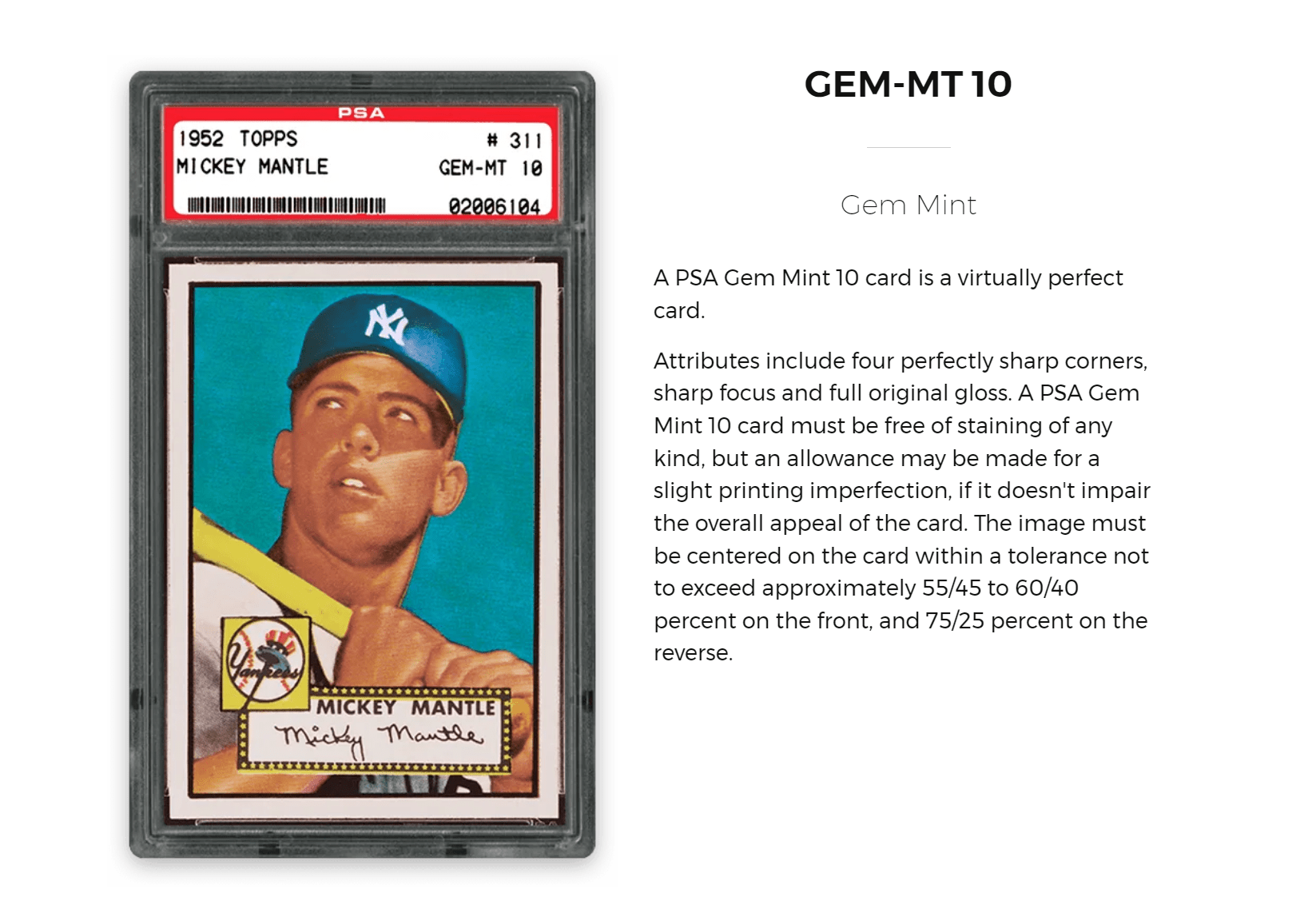
Grading is the process of submitting a raw card to a third-party authentication and grading service, most notably PSA (Professional Sports Authenticator) or BGS (Beckett Grading Services), which evaluates its condition and seals it in a tamper-evident plastic case called a slab. The graded card receives a numerical score from 1 to 10, with PSA 10 being the highest possible grade.
We’ve put together a comprehensive guide to PSA grading strategy that covers the submission process in detail. Here’s what you need to understand at a foundational level.
The grade matters enormously to value. A PSA 10 version of a card can be worth two, five, or even ten times what the same card in PSA 8 condition commands, depending on how scarce high-grade examples are. This premium exists because collectors who want the best possible copy of a card are willing to pay significantly for it, and the third-party grade gives them confidence they’re actually getting it.
One strategy that experienced collectors use is buying raw cards, meaning ungraded cards, that they believe are in condition good enough to grade out at a high level, submitting them for grading, and selling the resulting graded card at a premium. The math can work out well when the raw card is underpriced and the grade comes back strong.
This is risky and requires real expertise. Grading is subjective within ranges, and a card you believe deserves a PSA 10 might come back as an 8 due to a microscopic print defect or edge wear you didn’t catch. Grading also takes time, often months, and costs money in submission fees. If the card grades lower than expected, you’ve tied up capital and potentially lost money on the transaction.
This is not a beginner strategy. If you want to explore it eventually, spend real time handling cards, learn what the grading companies look for, and start small.
eBay is the dominant marketplace for sealed trading card product and most graded cards, offering the largest buyer pool and robust search functionality. TCGPlayer is the go-to platform specifically for Magic: The Gathering singles and has a growing presence in other TCG categories. COMC (Check Out My Collectibles) is used primarily by sports card sellers. Local game stores sometimes buy sealed product or collections outright, which can be useful if you need to liquidate quickly without waiting for an online sale.
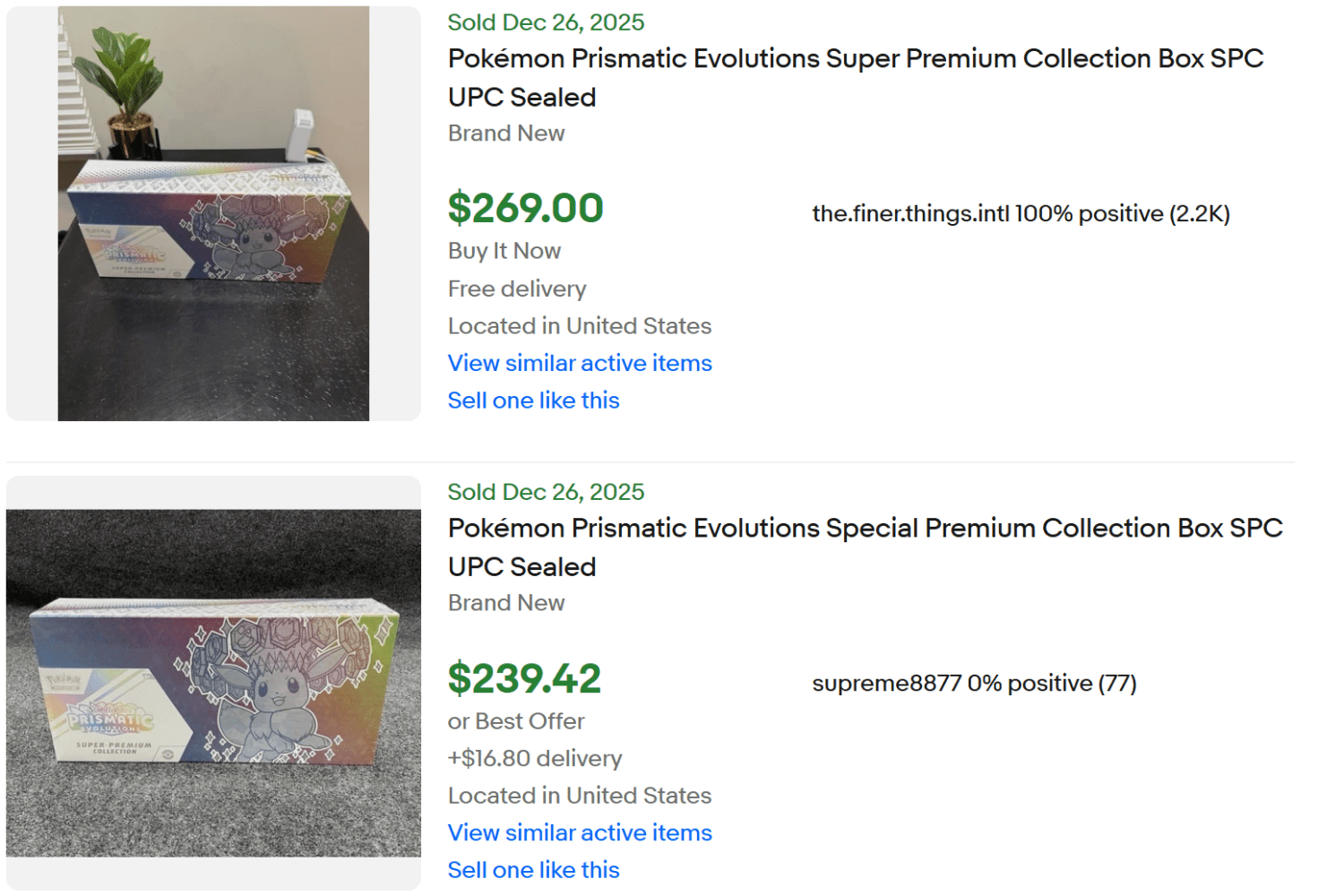
When listing sealed product on eBay, always check sold listings rather than active listings to calibrate your price. Active listings represent what sellers are hoping to get. Sold listings represent what buyers are actually paying.
The hobby has its own vocabulary. Here are some important words to know.
Auto (Autograph): A card signed by the player, athlete, or subject. Autographs are chase cards, meaning they’re rarer and more valuable than base cards. On-card autos, where the player signs directly on the card, are generally preferred over sticker autos.
Holo / Foil: A card that features a holographic or foil treatment, giving it a shiny, reflective appearance. Holos have been a chase card staple since the earliest Pokemon sets and remain highly desirable across most TCG products.
Base Card / Base Set: The most common cards in a set. Every product is built on a base set, which typically features a player or character at a standard print run. Base cards are the foundation everything else runs parallel to.
Parallel: A version of a base card that shares the same image and design but is distinguished by a different foil treatment, color border, or print run. Parallels are short-printed relative to base cards, making them more scarce and more valuable.
Insert: Any card that falls outside the base set and its parallels. Inserts have their own unique designs, themes, and numbering, and they’re typically produced in smaller quantities than base cards.
Logoman: A card featuring the actual logo patch cut from a player’s jersey. Because there’s only one logo per jersey, logoman cards are always 1/1 and among the most valuable cards in the sports card hobby.
Breaking: Opening multiple boxes or cases of product, sometimes with other collectors who have purchased slots or spots in the break. Box breakers often livestream on platforms like YouTube or Fanatics Live and distribute pulled cards to participants based on predetermined rules.
1/1: A card printed exactly once, making it the only copy in existence. 1/1 cards represent the ultimate rarity in any set and can command prices that bear no relationship to the surrounding market for that player or character.
Rookie Card/RC: The first card printed in a player’s professional career. Depending on when a player debuts in the sport the rookie card may or may not coincide with their rookie year.
Raw: A card that has not been submitted to a grading service. When you pull a card from a pack, it’s raw. Raw cards can be sold as-is or submitted for grading to potentially increase their value.
Sleeve / Slab: A sleeve is a thin plastic protective cover used to store cards without damaging them. A slab refers specifically to the hard plastic encasing used by grading companies like PSA and BGS to protect and display a graded card.
From thrift shops to card stores, the same skills apply
Less risk, more opportunities, plenty of profits
There's free money at the grocery store